
IML Specialties
Where art meets decoration.
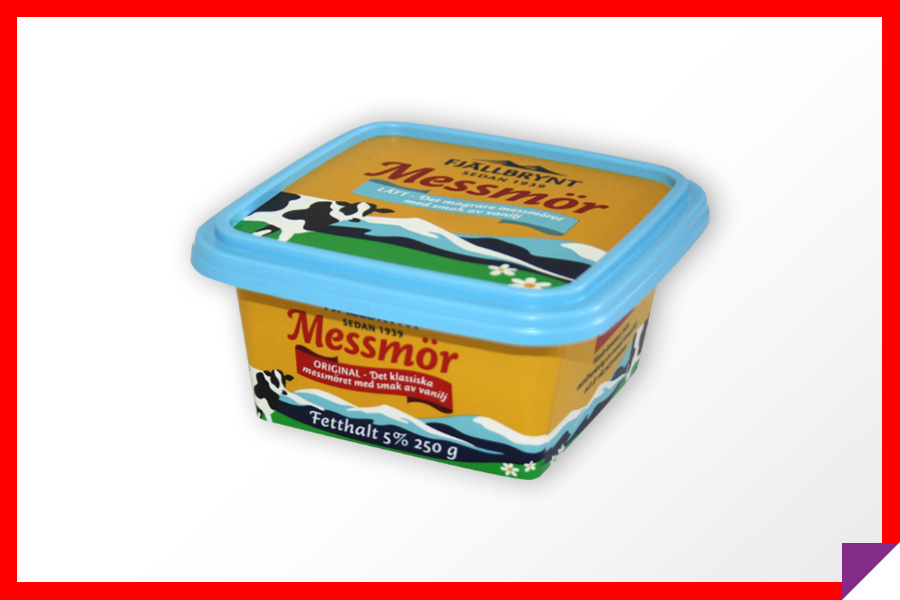
Barrier IML labels
IML labels can integrate a barrier function. This is possible thanks to an intermediate layer of EVOH or aluminium. Barriers to water vapour, light and aromas can also be created.
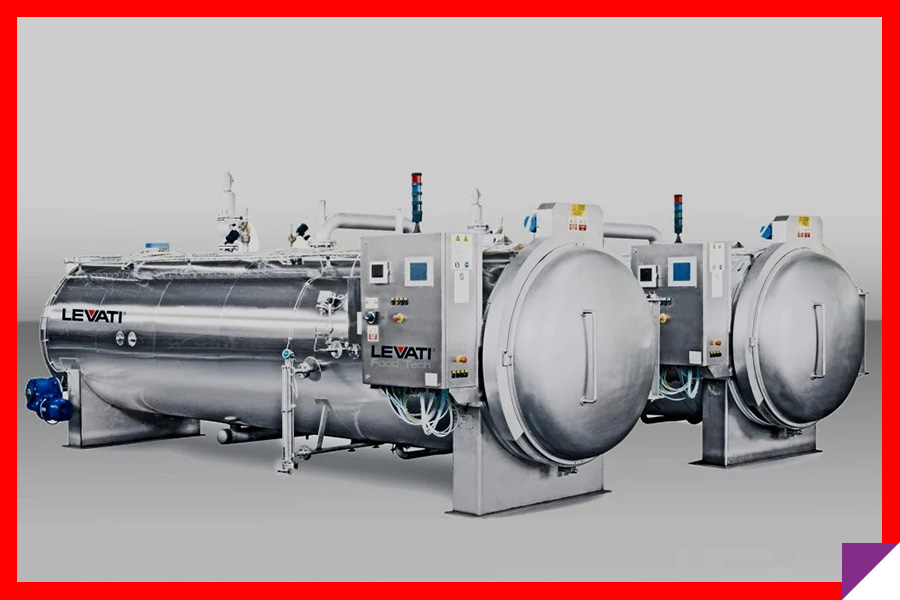
IML labels for pasteurization
Various types of packaged foods must undergo pasteurization, but this heat treatment stresses the label and print. Viappiani has a good technical solution for IML of pasteurized products.
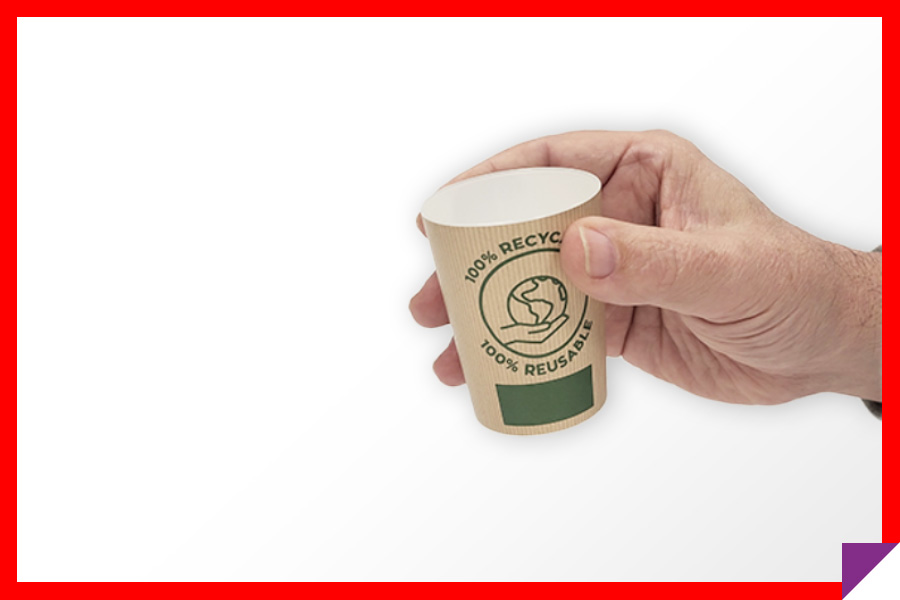
Dishwasher resistant IML labels
Reuse is one of the principles of sustainability. Thanks to dishwasher-resistant IML labels, multi-use labeled cups and containers can be produced that can be reused many times.
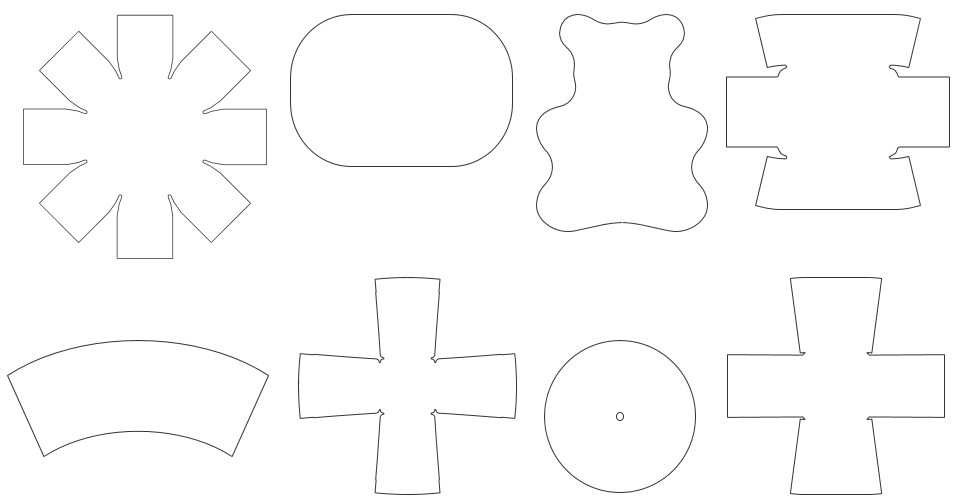
The container shapes the label
So-called anti-distortion labels also follow certain non-planar zones of the injected part without causing unsightly folds and wrinkles.
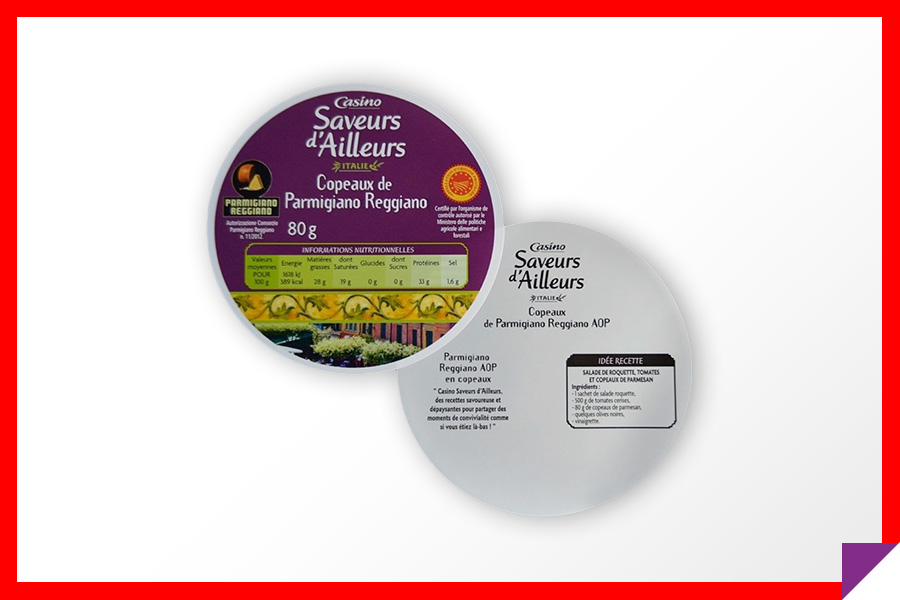
Recto/verso IML labels
With an IML label printed on both sides, transparent polypropylene can be injected and text (e.g. a recipe) can be read from the inside of the lid. This doubles the useful surface of the label.
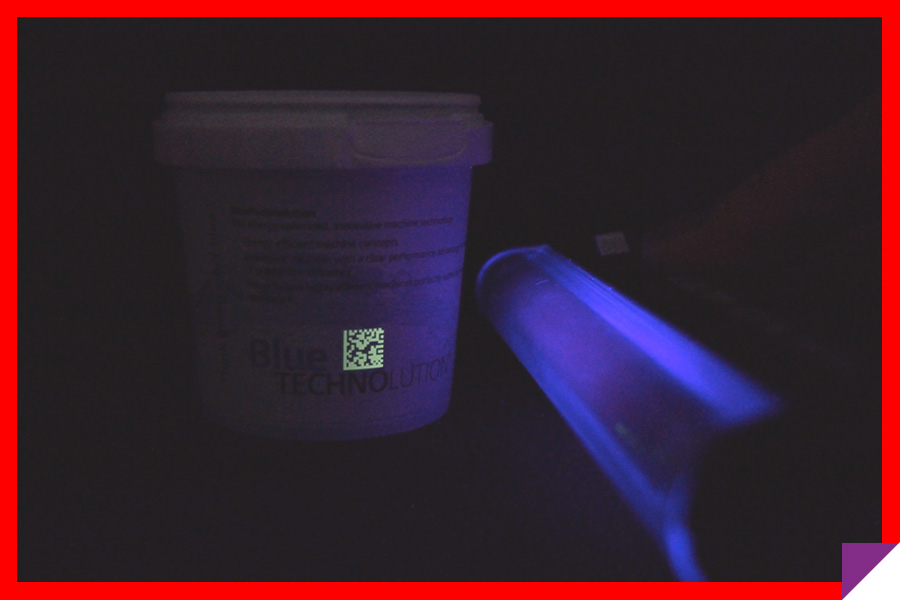
IML labels with invisible codes
For traceability, sorting or other reasons, standard codes such as QR or Datamatrix can be printed with a UV-reactive ink that is readable by special scanners but not visible to the human eye.
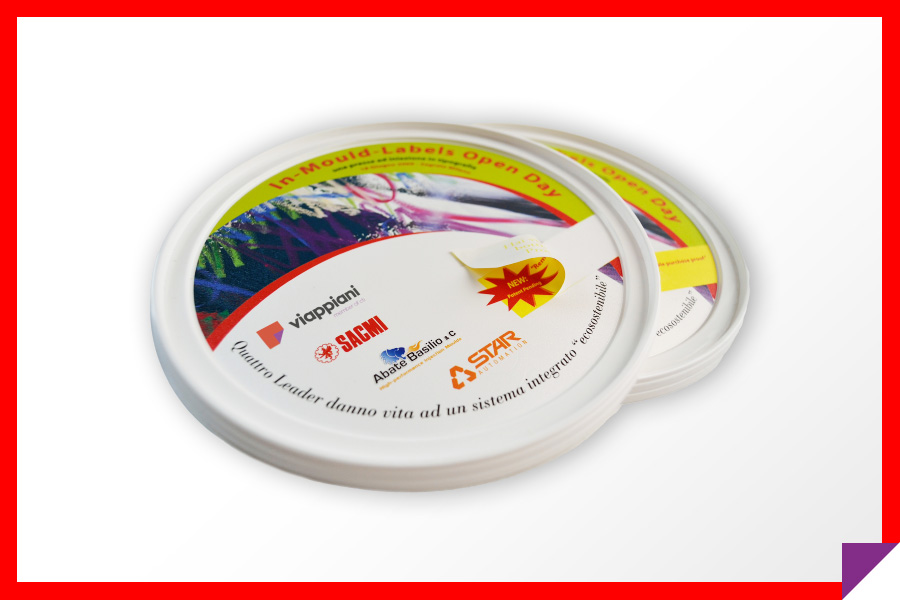
IML labels with removable coupons
IML labels can also have a removable proof of purchase. This coupon is pre-die-cut and can be removed by the end user, e.g. for loyalty programmes or other marketing initiatives.
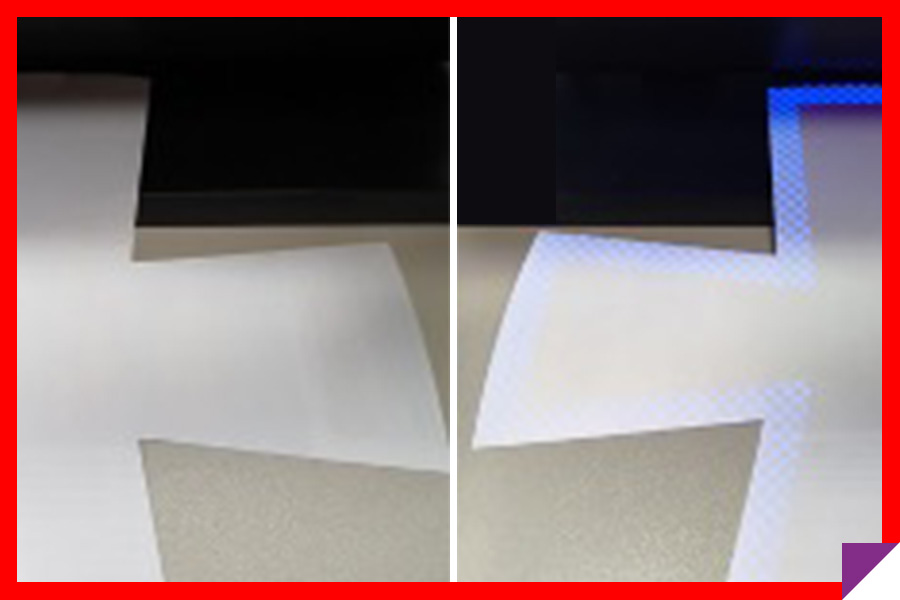
IML labels with overinjection detector
A special invisible print on the back of the label allows our customers to use an economical system for identifying under-injected parts.
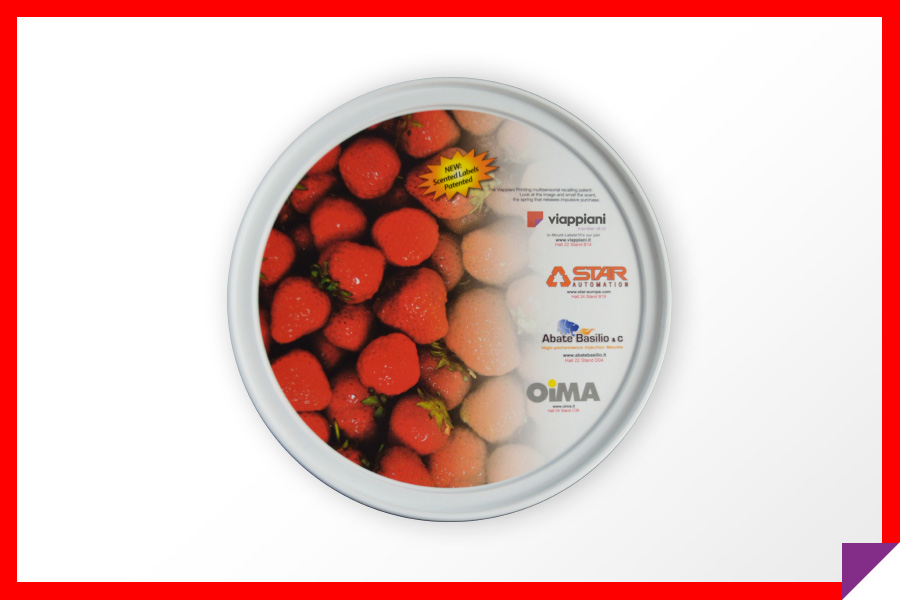
Scented IML labels
Thanks to a special technology, the smell of the contained product can be sensed, e.g. a lavender-scented fabric softener, simply by rubbing the surface of the label.
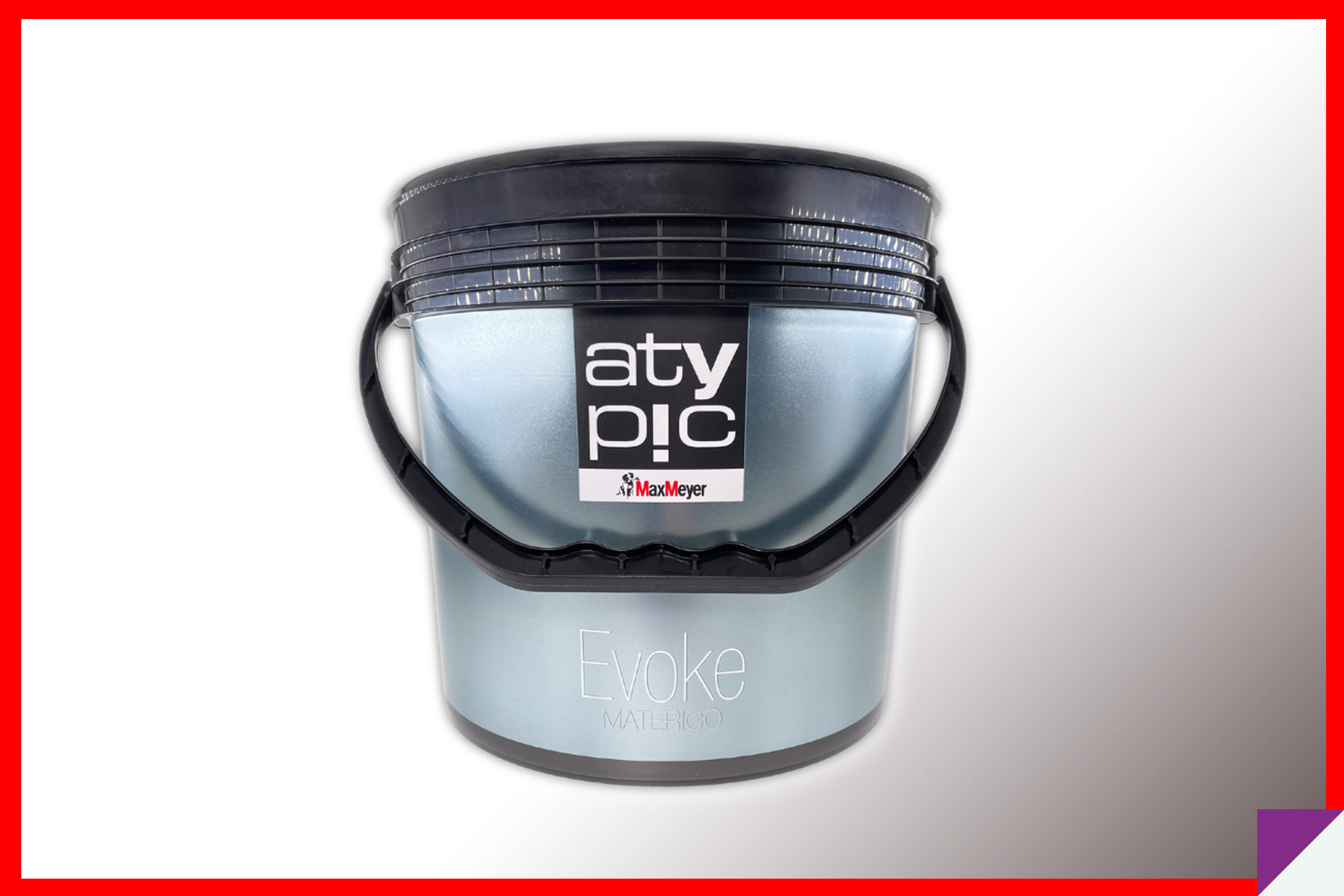
Metalised IML labels
Plastic IML labels can also have a metallised appearance. A fully metallised label can even look like a metal container.
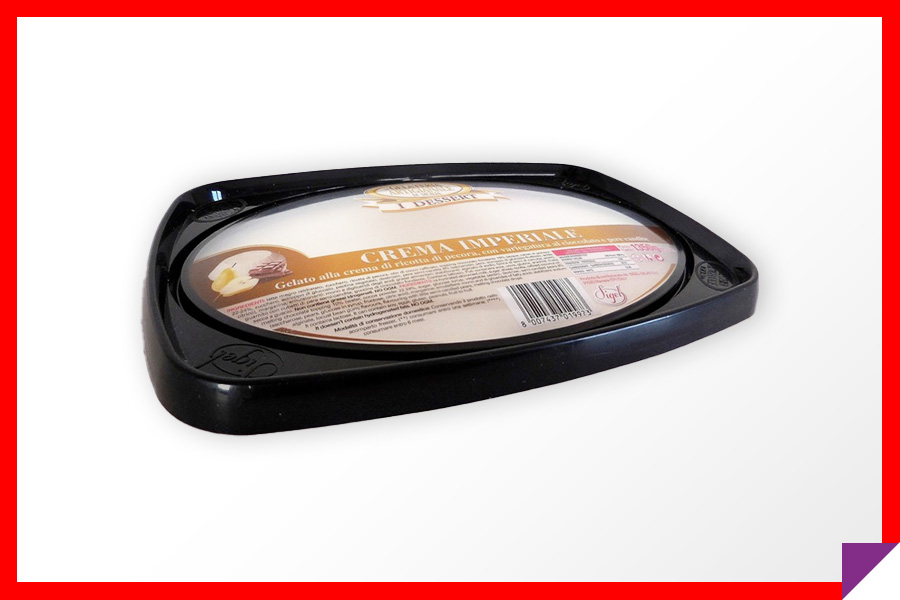
IML over-the-frame
A label as thick as 500 microns becomes a structural part of the lid. Only the black part of the lid is injected. The plastic part has black and transparent material without using a bi-injection press.